Subscribe to Market Urbanism

 Subscribe in a reader

 Subscribe to the audio version

Enter your email address:

Delivered by FeedBurner

Categories

Book Store

Book Store

A Conversation about the Commonwealth of Belle Isle


Yesterday I learned about a proposed free city in the United States through Arnold Kling. The project, called the Commonwealth of Belle Isle would be located on an island on the Detroit River that is currently a city park. The proposal comes from Detroit real estate developer Rod Lockwood who recently wrote a novel that takes place 29 years in the future when the city-state is developed and prosperous.

When Rod wrote the book, he wasn’t aware of the support for international charter cities from economists like Paul Romer and investors like Michael Strong. He said that he got the idea for the city when he was running a marathon that crossed into Belle Isle. “Necessity is the mother of invention. The current state of Detroit led me to think about possible solutions, and I realized that Belle Isle could be the next Singapore or Hong Kong.”

As Arnold Kling points out, Rod’s background in real estate development gives him advantages over some other charter city boosters without this background. “I do understand the costs involved in greenfield development such as utilities and I have site planning experience,” Rod said.

To move to the city, residents would have to pay $300,000 under the proposal to cover initial infrastructure costs. Rod sees the 982-acre island as home to 35,000 people. The city would be a walking city, with cars stored off of the island, and the initial infrastructure would include a monorail system. Rod said that being a car-free city outside of emergency vehicles and service vehicles is an important quality of life issue. “When I started researching city-states, I looked into Monaco, which does have cars and roads,” he explained. “It would be nice to have more green space than Monaco, and being a walking city will allow for that.”

Rod identifies himself as a libertarian, but doesn’t hold the view that a banning cars limits liberty. “It’s not a matter of liberty, it’s practicality. In a dense community, the automobile is not practical. Plus we’re not forcing anyone to live here, so if they want a car they can live elsewhere.” Aesthetics are an important selling point for the proposal, and Rod says that a visionary master planner is a key piece of the development. “It will be a high-density situation, and many details need to be worked out. A free market with no zoning wouldn’t work turn out well when you’re talking about developing an island.”

Aside from the car-free lifestyle which would put the Commonwealth in a very small handful of American cities, the primary policy difference lies in taxation and government services. Rod proposes that residents would pay a federal head tax of about $2,000 per year to cover their per capita share of  national defense. Residents would not pay any other federal taxes or receive any other federal services. For municipal services, the only tax would be a Georgist land tax, and government expenditures would be capped at 10% of GDP. “We’re not taxing income or capital gains because we want to encourage people to work and invest in tools, equipment, and technology. Likewise, we’re not taxing improvements on land because we want to encourage development.”

While the project would have many hurdles to cross at every level of government, Rod points out that the commonwealths of Puerto Rico and the Northern Mariana Islands provide precedent for jurisdictions that have different tax structures from residents living in the states. He says that the reason Detroit, Michigan and the United States should want to see this project go forward is because the new city would have a  ”tremendous positive effect on Detroit. This is precedent setting. The U.S. government would consent because Detroit is a problem city. I wish it weren’t but it is, and this would be a game changer.”


Car and Driver(less) Link List


1) A reader pointed out this post at Volokh Conspiracy arguing that personal cars give us freedom, citing the example of automobiles helping African Americans boycott segregated buses in the 1950s. Sasha Volokh writes:

Let’s think back to 1955, when African Americans stayed off segregated buses in Montgomery, Ala. During the year-long boycott, 325 private cars, some owned by African Americans, some by whites, some by churches, picked up people at 42 sites around the town.

I don’t think that it works to think of technologies as something that can increase our freedom, per se. While cars give some people greater freedom of mobility, for those who can’t drive or refuse to drive for whatever reason have worse freedom of mobility in cities that are built for automobiles. Rather government spending and regulations that favor one type of transportation over another impede the freedom of those who don’t prefer the favored mode. And in this case of cars presenting an alternative to segregated buses, Volokh explains that drivers picked up passengers at defined stops. They were using their cars to implement a voluntary community transit system, using cars beyond their purpose as personal automobiles.

2) Many people have written about the potential of driverless cars to enhance freedom of mobility and to improve automobile safety, but Meagan McArdle points out that car manufacturers will likely face greatly increased liability when driverless cars reach the roads. Do you think driverless cars are in our near future? I’m sold on their potential to cut back on parking in city centers.

3) My colleague Eileen Norcross writes at US News on Governor Bob McDonnell’s proposal to move to funding transportation with a sales tax rather than a gas tax in Virginia:

The governor is right to note that the gas tax suffers from multiple problems as a revenue source. As cars become more fuel-efficient and motorists choose to drive alternative fuel vehicles, the gas tax doesn’t go the same distance it once did. Also, Virginia hasn’t indexed the gas tax to inflation since 1986; otherwise the tax would be 36 cents per gallon by now.

However, switching from a user-based tax to a broader source of revenue for roads violates the principles of user-pays and transparency in taxation. The merit of the gas tax is that drivers pay for road improvements—at least in theory. In reality, the gas tax is a second-best option as a user-based source. Drivers don’t pay directly for their individual road use, as is the case with a toll-based system.

Also see the debate between Randall O’Tool and the Tax Foundation on this issue.

4) At New World Economics, Nathan Lewis applies Warren Buffett’s “Innovators, Imitators, and Idiots” theory of investment to real estate and suggests that new suburban greenfield development is in the “Idiots” stage as the patterns of new developments are no longer profitable:

1) New developments are too far from anything, and often imply commute times of an hour or more each way
2) Homes are too large for people to afford
3) Waaaay too much strip-mall type development, plus the realization that it is horrifically ugly
4) Land use patterns that are dominated by Non-Place (parking lots, roadways, and “green space” to make it all a little less hideous), i.e. “sprawl”


A Trial of Zoning


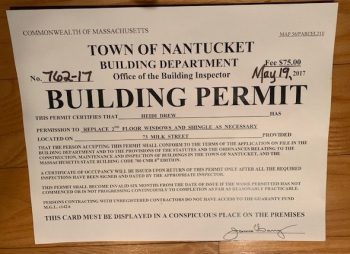
A recent Wall Street Journal op ed combines two of my favorite topics: Franz Kafka’s The Trial  and the inefficiencies of zoning. Roger Kimball explains the roadblocks he has faced in trying to repair his home after it was damaged in Hurricane Sandy. He writes:

It wasn’t until the workmen we hired had ripped apart most of the first floor that the phrase “building permit” first wafted past us. Turns out we needed one. “What, to repair our own house we need a building permit?”

Of course.

Before you could get a building permit, however, you had to be approved by the Zoning Authority. And Zoning—citing FEMA regulations—would force you to bring the house “up to code,” which in many cases meant elevating the house by several feet. Now, elevating your house is very expensive and time consuming—not because of the actual raising, which takes just a day or two, but because of the required permits.

Disaster rebuilding efforts highlight the impediments that bureaucracies create for economic development, but they are far from the only time that land use regulations create kafkaesque obstacles for property owners. In The High Cost of Free ParkingDonald Shoup explains that parking requirements can create a similar effect.

When a business owner goes out of business and wants to sell his property, it’s likely that the next owner will want to operate a different type of business in the location or that parking requirements will have changed since the previous owner received a certificate of occupancy. If this new business happens to face a higher parking requirement (and the determination of parking requirements often defies reason), repurposing the building will likely be impossible, and regulations lead existing neighborhoods into blight. These bureaucratic obstacles to redevelopment not only frustrate entrepreneurs and property owners, but fuels suburbanization and urban decline.


Q&A with David Schleicher


I recently spoke with George Mason University Law Professor David Schleicher about his research on land use law and economics. Here is our conversation including links to some of his academic articles that have earned a lot of attention in the land use blogosphere.

Emily: What are some the costs of land use restrictions? Talk about agglomeration economies and how these relate to development restrictions.

David: This is a huge area of research that spans back to Alfred Marshall looking at why cities exist in the first place. It comes up with explanations for why people are willing to pay increased rents to live downtown. These include lower transportation costs for goods, which was a major driver of urbanization for much of American history. Today this is a small driver of urbanization because the costs of internal shipping have fallen so dramatically. Now an important advantage of urbanization is market size. You can see this in all different markets. Restaurant rows are a great example of this. When you go to one of these rows where there are a lot of restaurants and bars, you have insurance that if one place you go is bad, you know you have other options nearby. The last category of agglomeration benefits is learning, or information spillovers. We see this in cluster economies like Silicon Valley where people at different firms learn from each other. As Marshall explained, “The mysteries of the trade become no mysteries, but are as it were in the air.” Wage growth is faster in urban areas than in rural areas, and this comes from this learning process. In the aggregate, if you keep people out of dense cities, you will decrease national productivity.

Emily: In your paper City Unplanning, you propose a tool called Tax Increment Local Transfers (TILTs) that would compensate property owners for allowing more development in their neighborhoods. How would these work?

David: The idea of TILTs is that new development increases the city’s property tax base. By multiplying the increase in the base by the tax rate, we get what is known as the tax increment. If we give some of this increment to neighbors of a project automatically, they may oppose projects less. It’s effectively an institutionalized bribe, but it would have some really neat effects. Currently we use Community Benefit Agreements, in which the developer bribes — “bribes” is so negative sounding — neighborhood opposition. But, CBA’s increase the cost of development. They act as a tax on development, so they are not as effective at lowering real estate costs. TILTs get money from a growing property tax base instead, so they have the neat effect of reducing the incentives to complain about new developments. So if you know you’re going to get paid through a TILT, your incentive to hold up the project goes down whereas with CBAs you have an incentive to make yourself a fierce opponent to development in the hopes of attaining a larger community benefit. Secondly, it has an information component. If residents know that they will receive monetary benefit from a development but they still oppose it, this provides the planning office with the information that residents would rather not have the building than have the cash.

It’s an idea to help overcome NIMBYist opposition to development in their neighborhoods and to help address the problem that we see very little housing and office growth in our largest cities. One source of this low rate of development comes from aldermanic privilege. The idea of this is that because most cities don’t have competitive political parties, we see that every councilman gets to decide on land use issues in his own district. The effect of this inside big cities is to turn a city like New York into something that politically looks like a lot of suburbs. All of the things that we’ve talked about with suburbs  using political influence to prevent new development in their town can happen inside a city legislature. The TILTs proposal is designed to make it attractive for individual councilmen who are going to control land use decisions in their districts to allow development. It’s acknowledging that the only way we might get more development is to pay off NIMBYs.

Emily: Transferable development rights share some similarities with TILTs in that both create incentives to build support for development. Do you see potential for TDRs?

David: I think of these as more similar to zoning budgets, another policy idea I’ve written about. Basically these are an announcement by cities that they want to allow more building, but they’re unsure of where they want to put it. TDRs are basically a market mechanism for setting the amount of building that the city wants to allow. They’re also traditionally a method of building coalitions, because they get preservationists in favor of new development near landmarked buildings because it’s going to channel cash to them. So the theaters of the 42nd Street theaters were able to sell their TDRs to nearby developers, and then the theater community got in favor of the redevelopment of Times Square. I think it’s a relatively attractive idea, and its a procedural solution like the ones I propose. Whether you could imagine it happening at the citywide level has never been done, but I think they’re very attractive.

Emily: I have previously considered a role for states in setting limits for how much municipalities can restrict land use because it seems that homeowner interest groups would not be as organized at the state level. What are your thoughts on that?

David: You have a problem here that the interest of the state is not necessarily maximizing land value. And of course states do get involved in land use. For example, Massachusetts’ anti-snob law created a work-around for local zoning. But in general, states don’t get involved because people get really angry when they do. I’m not opposed to states getting more involved in land use — I think I would probably be in favor of it — but there are problems. You can tell stories about how states get around land use inefficiencies because they are a higher level of government. People make the same types of arguments for regional governments. One of the problems with this is that states can end up behaving with the same aldermanic privilege that we see in cities, where legislators are allowed to make decisions for their districts. In states where there is not a lot of partisan competition, we see that legislators have a lot more power over bills that affect only their districts. So state land use policies might work better in states like Ohio or Michigan where there is more partisan competition, but in somewhere like Wyoming less so. You can imagine it going either direction.

Emily: What’s your opinion on the relationship between Smart Growth advocates and market urbanists?

David: The conflict between market urbanists and Smart Growth advocates is real, but it can be overstated. Their critiques of current zoning are roughly similar. They both think that we’ve separated land uses too much and that we’ve limited density too much. The modern regime governing land use is bad for the environment and its bad for economic productivity because it splits things up too much and it reduces entry to our richest cities. The answers that market urbanists and Smart Growth people give for how to fix this are different. So Smart Growth activists generally have a vision of what a city should look like. They’re prescriptive. Market urbanists are more demand driven. They say we have no idea what the optimal city should look like, we just think that unless there is a clear case of negative externalities, development shouldn’t be restricted. So the question of whether Smart Growth types and market urbanists are allies or enemies is an interesting one.  For the most part they are allies against the baseline position of modern American policy. That said, there are situations in which we disagree.  So take the never ending debate over the Height Act. Some, though not all prescriptive urbanists like the height limit because they have an idea of what a city should look like, and maybe a mid-rise city like Washington fits that pretty closely, whereas market urbanists think that’s ridiculous. If people want to build taller buildings on K Street, we can’t really see any reason why they shouldn’t. But in a lot of other arguments they agree.

Emily: Do you think that institutions like DC’s Advisory Neighborhood Commissions play a role in limiting development?

David: ANCs are effectively a mechanism through which neighborhoods are able to mobilize and organize opposition to projects. Their decisions are usually not fully binding, but they are able to make recommendations, and they usually win. They are designed to be a step in the process where the opinions of the neighbors can be heard. They are conceived of in opposition to Robert Moses-style trampling of neighborhoods, but their effect is by-intent to give neighborhood opposition to development more sway. And the way they do it is both by formally including them in the process and by providing a mechanism by which they can overcome the ordinary Olsonian limits on collective action. You have a hearing where everyone in the neighborhood gets together, and this allows them to coordinate opposition.

Emily: Some land use writers have focused on the importance of writing about the losses of zoning to educate people and changing public opinion. Do you think this is an important strategy along with advocating for procedural changes?

David: This is an area where the lawyers and the journalists approach the problem from a different method. I think it’s very well and good to educate people about the costs of excessive land use controls. The very use of the word NIMBY or BANANA is an effort to educate people and shame people for their preferences to stop development in their neighborhoods. To the extent this is effective I think that’s great. However, I think that opposition to building is rooted in something that you can’t talk people out of. People have made investment decisions to buy their homes and then have lots of incentives to stop building in their area. Procedural solutions are more likely to be fruitful, whether they’re mine or someone else’s, in changing the manner in which policymakers make decisions. These are differences in emphasis only. I think that educating people about the costs of zoning is great, but because people put so many of their assets into homes, I don’t think that telling people their decisions are economically unattractive is going to be very efficacious in changing their mind.

Emily: When upzoning is considered for broad areas rather than individual parcels, it seems that there could be a lobby among some homeowners who support upzoning for the chance to sell their home for redevelopment. Do you see less opposition to upzoning when the change applies to a larger area?

David: Absolutely. A project that I’m currently working on is that city’s master plans produce less-restrictive results than amendment-by-amendment zoning changes because you’re able to get deals across neighborhoods. So if you’re upzoning all of Washington you would have neighborhoods saying we’ll take a tower here if you’ll take a tower there, and you perhaps get something closer to expressing the city’s preferences. Whereas if you do this project-by-project, there is no reason to believe that if you allow a tower in your neighborhood that the next time the next neighborhood will be willing to take one. So you see cities where this happens. For example Philadelphia’s rezoning was consciously an effort to overcome the slow limitation on building and density created by amendment after amendment of downzoning.

Emergent Order in Cities and Markets


Last week at The Atlantic Cities, Allison Arieff posted a Q&A with Alex Marshall about what Marshall asserts are Jane Jacobs misunderstanding of how cities work. Marshall says:

Human interaction takes place, but it shouldn’t obscure what makes it possible, which is government. As much as I admire Jacobs, I suspect her experiences fighting Robert Moses, the master builder and destroyer of New York City, turned her off to government. So much so that I suspect she began to ignore it. Jacobs described how urban economies, such as say the computer ecosystem in the Silicon Valley, emerge in an organic way. I argue that these business ecologies emerge only within the containers that government builds. Both cities and economies emerge as overt political acts. They are constructed things.

Here Marshall completely eschews the historical evolution of both cities and markets in making his assertions. Both cities and markets are vehicles for human exchange, but neither is built by a person or a government. Populations, not infrastructure, are cities’ most important assets. Population changes, much like prices in a market, are a product of human action but not of human design. Historians have found evidence that the emergence of cities was not the result of ancient leaders’ direction but was rather the result of individuals acting in their own best interests. Likewise, we see both historical and current examples of trade emerging without government. States have much more power to limit trade or initiate plunder than they do to facilitate successful trade. Jacobs identified that the spontaneous order that allows prices to direct trade likewise leads city streets to serve their residents’ commercial and civic needs when they are not restricted from doing so.

Marshall asserts that Silicon Valley didn’t emerge organically because it came about within the legal and infrastructure ”containers” that government provides. While it’s true that government provides infrastructure and rule of law in Silicon Valley, it’s impossible to point to a person or group who created this tech cluster from the top down. Rather many individuals pursuing their own plans created this tech center. We can see a clear difference between unplanned clusters like Silicon Valley and top down attempts to create similar economic centers. As Gert-Jan Hospers, Pierre Desrochers, and my former colleague Frédéric Sautet explain, governments are not equipped to create successful clusters:

There are no fundamental reasons to believe why policy makers are better informed than entrepreneurs in assessing the future economic potential of particular ventures (including clusters). Due to the inherent uncertain character of new technologies such government failure is likely to occur especially when it comes to high-tech clustering. As Schmookler (1966, p. 199) argues, almost all instances of innovative activities that he studied were not stimulated by policy-pushed scientific research but by the realization that a costly  problem had to be solved or that a profit opportunity could be seized. According to Miller and Côté (1985), this is one of the main reasons why ‘innovation centers’ and other greenhouses in innovation parks opened in the USA and Canada in the 1970s and 1980s have failed without exception. Also French high-tech policy in the 1980s shows the risks of a strategy of picking winners. After five years of subsidizing the micro-electronics sector the French had to admit that they backed the wrong horse.

The dispersed knowledge that prevents governments from creating economic clusters likewise leads to countless failures in government efforts to build or rebuild cities. While Jacobs recognized that both urban and economic development must be driven from the bottom up to succeed in the face of these knowledge problems, she was not anti-government as Marshall claims.  Benjamin Hemric, a regular Market Urbanism commenter, commented on the post to point out that Jacobs did not in fact disregard the importance of government. In fact while libertarian writers have often pointed out the free market themes in her writings with her appreciation of emergent orders, Jacobs herself rejected the libertarian label and instead spent the end of her life promoting the role of good government in both cities and economic development.


Meetup this Saturday


This weekend Anthony Ling who writes the blog Rendering Freedom (and has previously written here) will be in DC. Stephen Smith will also be in town, and we’re planning a meetup on Saturday. Anthony is an architect in São Paolo. He writes about architecture, economics, and urbanism, and I’m excited to learn more about his experiences studying and working in Brazil.

If you’re in the DC area, I hope that you can join us.

Details:

Saturday, December 1st at 1:00 p.m.

Burger Tap and Shake (at Washington Circle in Foggy Bottom)

Please email me at emilybwashington@gmail.com if you have any questions.

Irrelevant real estate trends


Earlier this week Wendell Cox wrote a piece at New Geography arguing that projections for increasing demand for multifamily housing relative to single family homes are incorrect. He was criticizing a study by Arthur Nelson that predicts increased demand for multifamily housing relative to single-family housing in California between 2010 and 2035. So far, Cox points out that this hypothesis is not being fulfilled; between 2000 and 2008 slightly over half of newly occupied housing units were single-family homes on conventional lots (larger than 1/8 acre), not indicative of a shift in preferences toward multifamily housing.

Cox emphasizes that his data is based on revealed preferences rather than forecasts or surveys which may indicate a false preference for denser housing. However, he does not acknowledge that these preferences he cites are not revealed in a free market. The mortgage interest tax deduction biases home buyers toward larger homes, the complex entitlement process for dense infill development restricts supply of denser housing, and the the zoning and parking requirements that regulate development all shape revealed consumer decisions.

Both Cox and Nelson seem to base their views of consumer preferences heavily on introspection, assuming that over time more Americans will come to share their preference for suburban or urban living respectively. And they both take the same approach of looking at the real estate trends aggregated across the entire state. This is an interesting question for academics, but not a particularly relevant area for real estate markets. Real estate is local, and state trends are not likely to apply to many cities and neighborhoods. The average home sold in California went for $309,000 at $195 per square foot last month. However this statistic is meaningless for West Hollywood residents where the  average sale price was $378 per square foot. It’s equally meaningless for Bakersfield residents where the per-square-foot price was $87. Only one of these local areas faces a housing affordability problem, which Cox emphasizes is an important concern for land use policy.

Fortunately for consumers, it’s not necessary for academics to accurately forecast changing real estate preferences. They only need for local developers and homebuilders to do so, and the profit incentive leads developers to do just this, unless policy prevents them from doing so. High housing costs indicate supply restrictions that prevent developers from meeting consumer demands. If Bakersfield city planners adopted a binding urban growth boundary, the type of policy Cox decries, we would see the cost of conventional single family homes rise. In most of the places where we see housing affordability problems such as West Hollywood, it’s not Smart Growth policies that are to blame, but rather conventional zoning that prevents increased density from bringing down housing costs.

The most notable exception to this is Portland’s Urban Growth boundary which, in conjunction with density restrictions, keeps house prices in the city at $200 per square foot compared to the state average of $135. This UGB seems to be the driving force behind the work of many anti-density “market suburbanists,” which alone is enough of a reason to oppose this policy. However, in the cities where residents pay the greatest premium for housing, it’s likely that we would see much more multifamily home construction in a freer market.

If zoning restrictions and parking requirements were relaxed in areas of the country where residents currently pay the highest premiums to live, we would in large part see more multifamily construction rather than single family. This is why, despite the cumbersome entitlement process for multifamily buildings in many cities, and the mortgage interest deduction luring consumers to larger owner-occupied homes, over half of last year’s building permits were for multifamily units in some of the country’s most expensive cities like Los Angeles, New York, and Washington, DC.

Campaign season is over links


Stephen had great twitter coverage of urbanist election issues last night, but here are a few more links to significant outcomes:

1. Washington state and my home state of Colorado voted to legalize marijuana possession, private use, and in Colorado limited production. Drug policy liberalization is a huge win for cities, as arrest rates among users are higher in urban areas. However, given the current administration’s intolerance for medical marijuana dispensaries that are legal under state laws, I see little reason to hope that the feds won’t prosecute drug users  who are in violation of federal but not state laws.

2. In Alexandria, VA voters reelected democratic Mayor William Euille and elected an all democratic city council. This has ramifications for the city’s waterfront redevelopment plan; opponents of increased development have sued, and the case will be heard by the state supreme court this spring. Opponents allege that the zoning change required supermajority support from the city council, but the new democratic plurality makes supermajority support likely.

3. In Escondido, CA voters passed upzoning with Proposition N which will allow increased downtown housing development as well as allow more commercial and industrial development. The city’s conservative leadership supported Proposition N for economic development.

4. Kirk Caldwell was elected mayor of Honolulu. The opposing candidate Ben Cayetano ran on an anti-rail platform. Rail in Oahu is already under construction, but a lawsuit has stalled progress. The elevated 20-mile HART project has a projected $5.2 billion price tag, $1.55 billion of which local officials say will come from the federal government.  I don’t know enough about the project to have an opinion on whether or not it’s a good idea.

5. Virginia voters said “yes” on Question 1, requiring authorities to demonstrate public use to employ eminent domain (as opposed to the Kelo public benefit standard).

6. I won my unopposed election for Area Neighborhood Commissioner in DC’s 1B08 district and look forward to being a market urbanist voice in local politics.