Physical Address
304 North Cardinal St.
Dorchester Center, MA 02124
Physical Address
304 North Cardinal St.
Dorchester Center, MA 02124

Liberalizing Cities
From The Ground Up

Housing policy expert Madeleine Marr dug into previously-written legislative histories of federal housing bills. She was kind enough to share her bibliography, including in parenthesis which housing laws are covered:
The CityNerd Youtube channel has a video on the ten U.S. cities “that are becoming most city-like.” One of Citynerd’s criteria grabbed my attention: he gives credit for cities having an increase in “car-lite households”, by which he means having…

On April 17, 1980, the Washington Post ran a curious paragraph, reporting a five-year-old quote for the first time – one withheld originally out of deference to the source: [Douglas Schneider’s] views of urban transportation were spelled out clearly in…
Every so often I read a ringing defense of anti-housing, anti-development politics. Someone on my new urbanist listserv recommended an article by Lynn Ellsworth, a homeowner in one of New York’s rich neighborhoods who has devoted her life to (as she…

The Great Depression featured vast Hoovervilles, which expanded the hobo “jungles” of earlier times. When wartime production drew millions into industrial cities that had no beds for them, why didn’t the Hoovervilles expand into Rosie-the-Rivetervilles? The corollary is that the…
I recently saw a tweet complaining that left-wing YIMBYs favored urban containment- a strategy of limiting suburban sprawl by prohibiting new housing at the outer edge of a metropolitan area. (Portland’s urban growth boundaries, I think, are the most widely…

Is it even possible today to write a vigorous argument in favor of the urban renewal policies of the 1950s? I doubt it. Jeanne Lowe's 1967 "Cities in a Race with Time* is a sympathetic account of the urban renewal era in its own terms. How does it hold up?
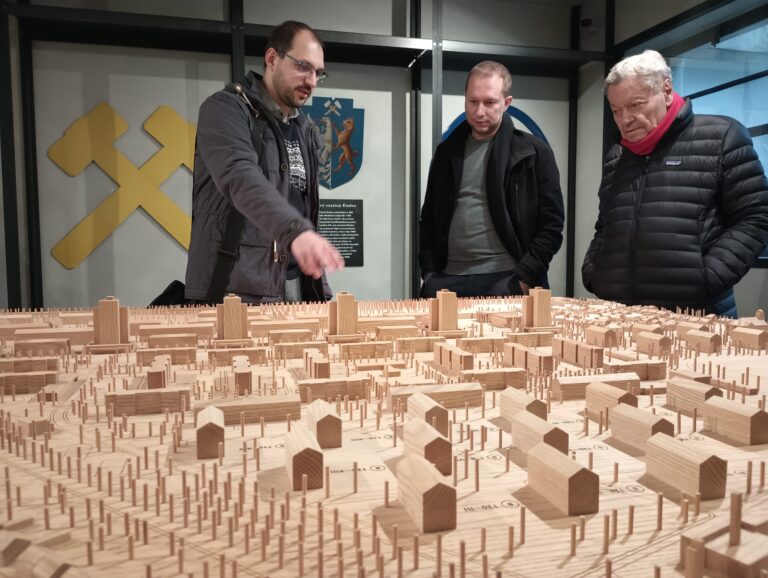
Most master plans are a costly effort by a team of temporary consultants, spread over two to three years, to prepare a blueprint that is usually obsolete as soon as it is completed.
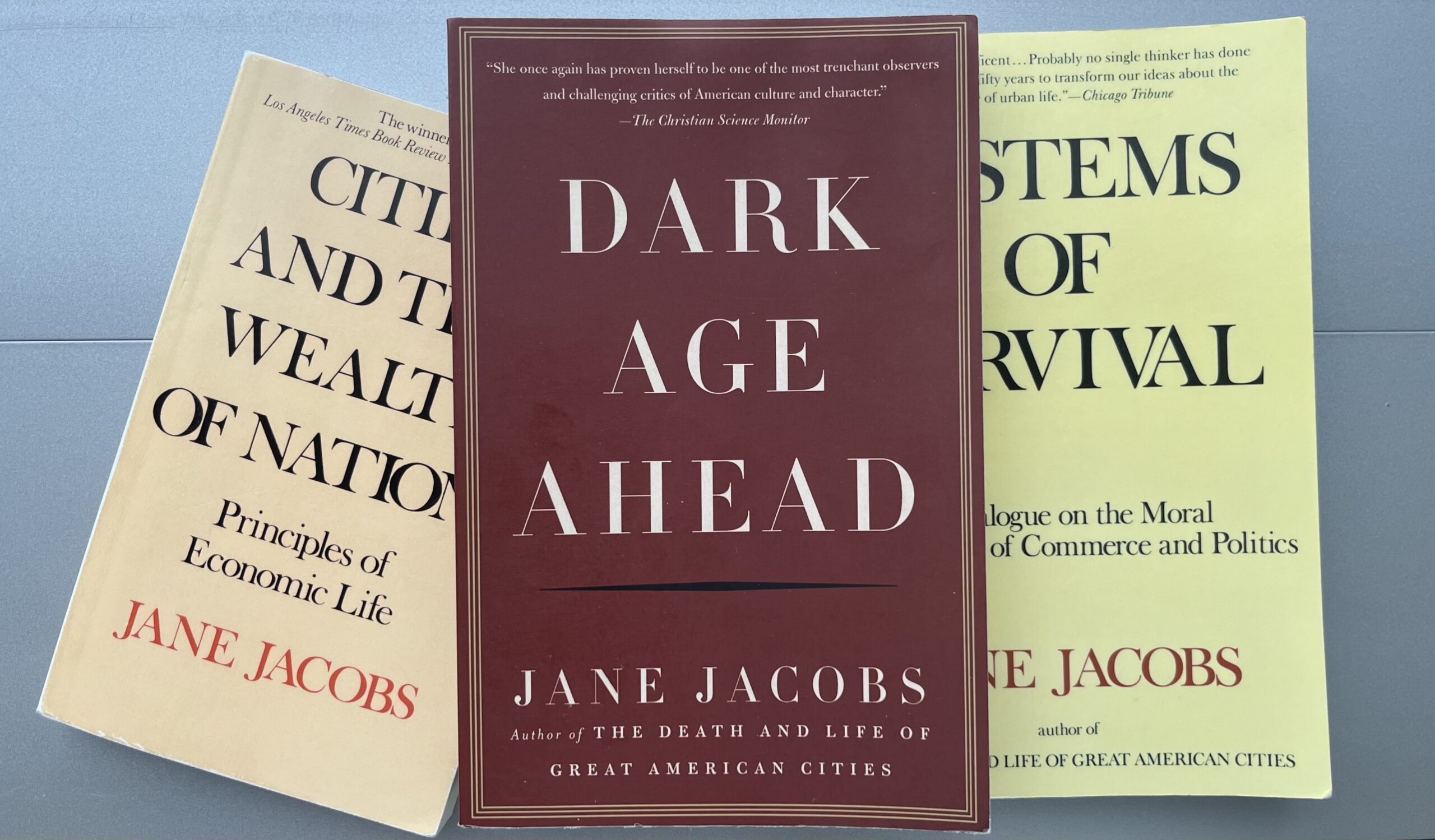
Jane Jacobs wasn’t optimistic about the future of civilisation. ‘We show signs of rushing headlong into a Dark Age,’ she declares in Dark Age Ahead, her final book published in 2004. She evidences a breakdown in family and civic life, universities which focus more on credentialling than on actually imbuing knowledge in its participants, broken feedback mechanisms in government and business, and the abandonment of science in favour of ‘pseudo-scientific’ methods. Jacobs’ prose is, as always, rich, convincing and successful in making the reader see the importance of her claims. Yet the argument that we are spiralling into a new Dark Age, similar to that which followed the fall of the Roman Empire, is not quite complete and I remain unconvinced that the areas she identified point towards collapse as opposed to merely things we could, and should, work to improve. Let us start with the idea that families are ‘rigged to fail,’ as she puts it in chapter two. Jacobs, urbanist at heart, cites ‘inhumanely long car commutes’ stemming from the disbanding of urban transit systems, rising housing costs, and a breakdown in ‘community resources’ – the result of increasingly low-dense forms of urban development – as a significant reason why families are now set up for failure. She suggests our days are filled with increasingly vacuous activities, leading to the rise of ‘sitcom families’ which ‘can and do fill isolated hours’ at the expense of ‘live friends.’ That phenomenon has now been replaced by the ‘smartphone family’ where time spent on TikTok, and consuming other forms of digital media have supplanted the ‘sitcom’ family of the past. There has been significant literature on the detrimental effects of digital technologies to our physical and mental health, not least in Jonathan Haidt’s most recent book, The Anxious Generation. A similar picture is painted by Timothy Carney in […]
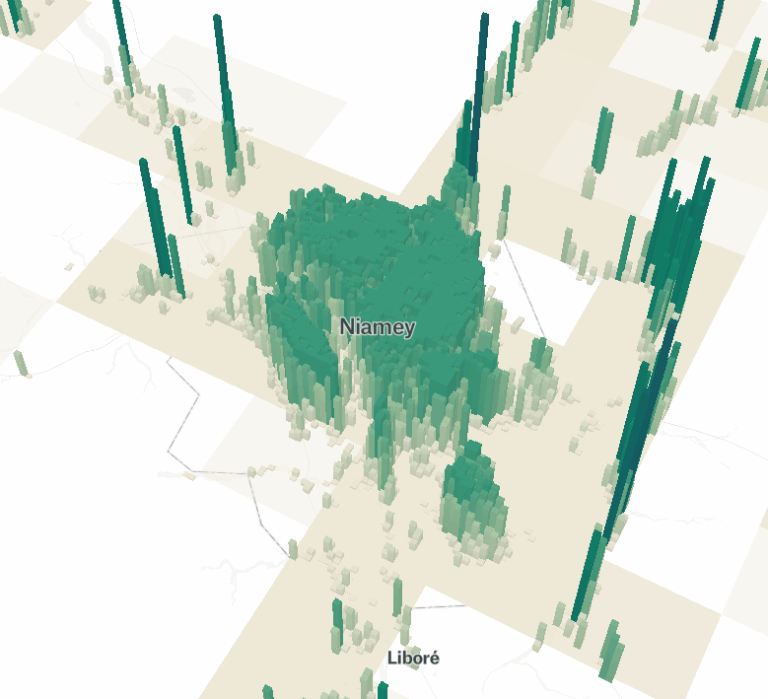
Three cool sites for data and visualizations