Physical Address
304 North Cardinal St.
Dorchester Center, MA 02124
Physical Address
304 North Cardinal St.
Dorchester Center, MA 02124

Liberalizing Cities
From The Ground Up
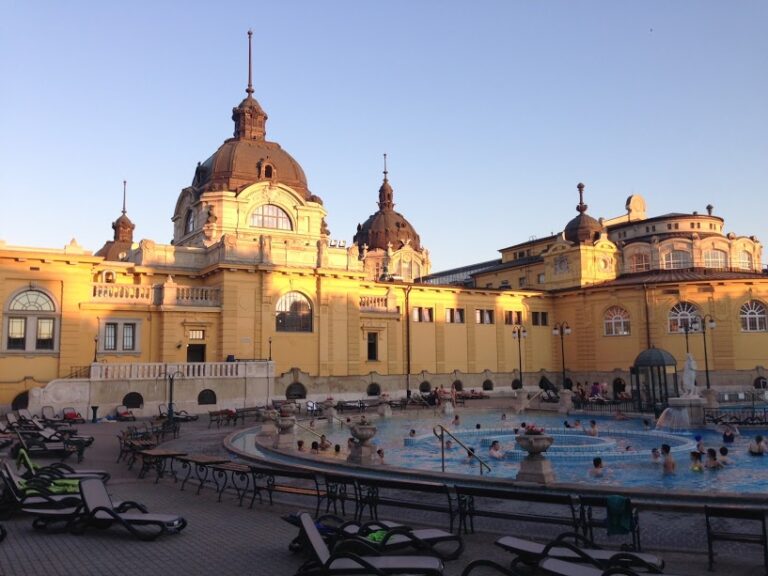
I’ve been enjoying the series Meet the Romans, and episode 2 really revealed what I love about many ancient Roman cities. I’ve been to quite a few, though often without knowing beforehand that they were ancient Roman cities. These include cities like Dubrovnik, Split, La Spezia, Florence, Istanbul, Budapest, and yes, Rome. The attributes I’ve come to love include: 1. very narrow streets, often not accommodating cars 2. countless 4- to 6-story buildings with a variety of units, from cheap tiny units to large family units with courtyards 3. built into the 1st floor of these buildings are tiny shops – everything from restaurants to banks to bakeries 4. in ancient Rome most housing units weren’t used for much more than sleeping – living was done in the city. You often didn’t have a kitchen, laundry facilities, or even a bathroom. The host Mary Beard tells about the horrors of these things (barely enough room to lie down, the danger of dark small alleys), but I think in a modern world they’d be wonderful (ok, keep private bathrooms). Walk to your job, spend time in a vast variety of restaurants or pubs, experience the feeling of a busy narrow street, chat with neighbors at a public park, and take your kids to relax and play at the public bath or let them play in a public square while you grab a cappuccino. This is heaven to me. The only reason most modern cities aren’t like this is because we force them not to be. We require minimum space for all housing types, design our streets for cars instead of people, limit the height of buildings in most places, and separate our retail from our living zones. The effect is to push the less-rich outward, separate us from other people, and […]
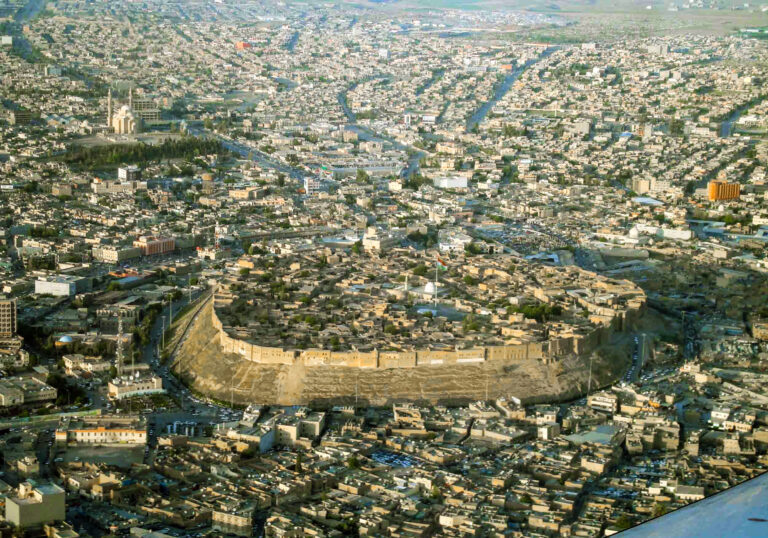
People in the American Midwest are said to be on average more conservative and more libertarian than people who live on the East and West Coasts. And that in turn is because people in rural areas are said to be more strongly tied to the traditions of individualism and self-reliance than those in big cities such as New York, Los Angeles, Chicago—who politically are more statist and tend to see government as a first-responder to perceived economic and social problems. We could go back and forth arguing with conflicting evidence on urbanity and ideology that depend on, for example, whether you use “Republican” and “Democrat” as proxies for “right-wing” and “left-wing,” whether you’re comparing states or counties, and so on. So for the sake of argument I will concede that in today’s United States “urban” means statist and “rural” means conservative and libertarian. Does it follow then that people who live in dense cities are necessarily more statist than people who live in lower-density rural areas, exurbs, and suburbs? I think not. I believe the positive correlation between political conservatism and libertarianism and rural or “agricultural” living is an historical anomaly; that historically the countryside has been a great obstacle to liberty while cities have been the places where liberty and the fruits of liberty have flourished. (I place “agricultural” in quotation marks because only about 2 percent of Americans actually live on farms.) American Conservatism and the Libertarian Movement There are at least two meanings attached to the word “conservative.” The more general meaning refers to someone who has an above-average attachment to certain ideas and ways of living that are considered traditional. Now, few people like change as such and everyone has an attachment to at least some ideas of the past, whether conservative or liberal, libertarian or […]
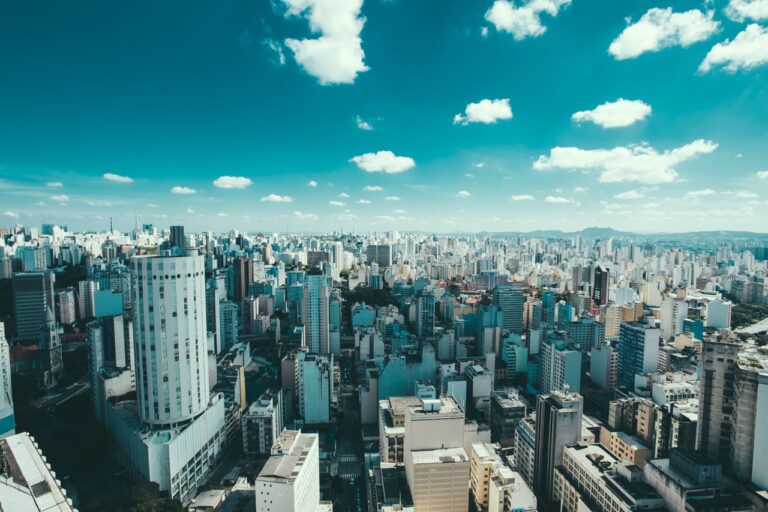
My guest this week is Anthony Ling. Anthony is founder and editor of Caos Planejado, a Brazilian website on cities and urban planning. He also founded Bora, a transportation technology startup and is currently an MBA candidate at Stanford University. He graduated Architecture and Urban Planning at Universidade Federal do Rio Grande do Sul and worked with Isay Weinfeld early in his career. Read more about the ideas discussed in this week’s episode: Be sure to check out Caos Planejado. Whether Portuguese is your native language or you’re interested in Brazilian urban planning issues, it’s a fantastic resource. Learn more about the emergent order of informal favela development. Everyone interested in urban planning should, at the very lease, read the Wikipedia article on Brasilia. Learn more about on-demand transit. Help spread the word! If you are enjoying the podcast, please subscribe and rate us on your favorite podcasting platform. Find us on iTunes, PlayerFM, Pocket Casts, Stitcher, and Soundcloud. Our theme music is “Origami” by Graham Bole, hosted on the Free Music Archive.
Commercialism is blamed for most of the evils that plague society, inside and out of India. In the Indian city of Coimbatore, roads have become narrower and traffic more intense. There is not enough space for pedestrians. Many residents blame the city’s rising level of commercialization. Are these people correct? If they were, the world’s most commercial cities would be the least livable. But anyone with a modicum of education or travel experience knows this is not true. The cities with the most economic freedom, commercial enterprise and prosperity–think Hong Kong, Singapore, London, Sydney and Vancouver–also have the highest living standards. Similar studies show that the cities with the lowest living standards, meanwhile, are in countries that are developing, or that are suffering under repressive, anti-capitalist regimes (think Caracas, Venezuela, the world’s most dangerous city). Nevertheless, it is clear that the most commercialized Indian cities have become less livable in some important ways, such as by suffering from more congestion. So, what is going on? It is true that people migrate to cities with more commercial enterprise. It may seem that such “crowding” is unpleasant. But people are migrating to these cities precisely because there are more shops, hospitals, schools, leisure spaces and other amenities. The fact that there is already a heavy concentration of people in these cities is an important factor also, since that means there are more potential employers and business associates. Alas, the existence of people somewhere lures yet more people. Indeed, it is hard to think of a neighborhood where real estate prices have significantly fallen because of population growth. Such neighborhoods may have become more crowded…but that does not mean they are less livable. Moreover, vast population growth and crowding are not the same. Population density is defined as the number of people living on […]