Physical Address
304 North Cardinal St.
Dorchester Center, MA 02124
Physical Address
304 North Cardinal St.
Dorchester Center, MA 02124

Liberalizing Cities
From The Ground Up
In 2005, Joseph Gyourko published an economic history of Philadelphia. He explored the economic and policy factors that contributed to its population and job loss during the twentieth century. Gyourko’s outlook for Philadelphia was pessimistic. He argued that the city lacked the supply of skilled labor that would allow it to adapt to the rise of the service sector. However, in the year following Gyourko’s publication, Philadelphia’s population growth rate reversed, driven by foreign immigration and college graduates choosing to stay in the city where they went to school. In spite of this growth, the city has maintained an impressive level of housing affordability. Philadelphia obviously hasn’t had the level of demand pressure other coastal cities like New York or San Francisco have seen, but since 2005, it has experienced steady population has growth from 1,400,000 to 1,550,000 people. Among potentially comparable mid Atlantic and midwest cities, only Pittsburgh has lower prices. During its decade of population growth, Philadelphia’s home prices essentially tracked the rate of inflation. Unlike newer cities that have the option of relatively cheap greenfield development, the Census designates nearly all of Philadelphia’s neighborhood as urban, the densest designation. The city’s population growth has been accommodated through infill development and the renovation of old homes rather than through greenfield development. It’s not the case that Philadelphia’s zoning regime accommodates as-of-right growth. Philadelphia developers have to deal with a complex web of outdated Euclidean zoning rules and myriad overlays. But developers have generally been able to get the variances they need to provide a supply of housing that keeps prices from rising in response to population growth. Philadelphia doesn’t have organized political opposition comparable to NIMBY activity in more expensive cities. Residents’ reaction to calls for community involvement in the development process demonstrates the city’s anti-NIMBY tendencies. In 2012 the city implemented zoning […]
This post was originally published at mises.org and reposted under a creative commons license. It’s no secret that in coastal cities — plus some interior cities like Denver — rents and home prices are up significantly since 2009. In many areas, prices are above what they were at the peak of the last housing bubble. Year-over-year rent growth hits more than 10 percent in some places, while wages, needless to say, are hardly growing so fast. Lower-income workers and younger workers are the ones hit the hardest. As a result of high housing costs, many so-called millennials are electing to simply live with their parents, and one Los Angeles study concluded that 42 percent of so-called millennials are living with their parents. Numbers were similar among metros in the northeast United States, as well. Why Housing Costs Are So High? It’s impossible to say that any one reason is responsible for most or all of the relentless rising in home prices and rents in many areas. Certainly, a major factor behind growth in home prices is asset price inflation fueled by inflationary monetary policy. As the money supply increases, certain assets will see increased demand among those who benefit from money-supply growth. These inflationary policies reward those who already own assets (i.e., current homeowners) at the expense of first-time homebuyers and renters who are locked out of homeownership by home price inflation. Not surprisingly, we’ve seen the homeownership rate fall to 50-year lows in recent years. But there is also a much more basic reason for rising housing prices: there’s not enough supply where it’s needed most. Much of the time, high housing costs come down to a very simple equation: rising demand coupled with stagnant supply leads to higher prices. In other words, if the population (and household formation) is […]

The far-left “TruthOut” web page recently published an attack on YIMBYs,* describing them as an “Alt-Right” group (despite the fact that the Obama Administration is pro-YIMBY). I was surprised how little substance there was to the article; most of it was various ad-hominem attacks on YIMBY activists for cavorting with rich people. I only found two statements that even faintly resembled rational arguments. First, the article suggests that only current residents’ interests are worth considering in zoning policy, because “the people who haven’t yet moved in” most often means the tech industrialists, lured by high salaries, stock options and in-office employee benefits like massage therapists and handcrafted kombucha.” This statement is no different than President Trump’s suggestion that Mexican immigrants “[are] bringing drugs. They’re bringing crime. They’re rapists.” – that is, it is an unverifiable (if not bigoted) generalization about large numbers of people. Furthermore, it doesn’t make sense. The “tech industrialists” have the money to outbid everyone else, so they aren’t harmed by restrictive zoning. Second, the article states that academic papers aren’t as relevant as the actual experiences of San Franciscans displaced by high housing costs. In response to the argument that less regulation means cheaper housing, it states “tell that to people like Iris Canada, the 100-year-old Black woman who had used local regulations to stay in her home of six decades, only to be evicted in February.” So in other words, somebody was evicted in San Francisco, therefore San Francisco’s restrictive zoning prevents eviction. I don’t see how the latter follows from the former. The whole point of the YIMBY/market urbanist argument is that if there was more housing, there would be lower housing costs, hence fewer evictions. *For those of you who are unfamiliar with the term, YIMBY means “Yes In My Back Yard”, a […]
Caos Planejado, in conjunction with Editora BEI/ArqFuturo, recently published A Guide to Urban Development (Guia de Gestão Urbana) by Anthony Ling. The book offers best practices for urban design and although it was written for a Brazilian audience, many of its recommendations have universal applicability. For the time being, the book is only available in Portuguese, but after giving it a read through, I decided it deserved an english language review all the same. The following are some of the key ideas and recommendations. I hope you enjoy. GGU sets the stage with a broad overview of the challenges facing Brazilian cities. Rapid urbanization has put pressure on housing prices in the highest productivity areas of the fastest growing cities and car centric transportation systems are unable to scale along with the pace of urban growth. After setting the stage, GGU splits into two sections. The first makes recommendations for the regulation of private spaces, the second for the development and administration of public areas. Reforming Regulation Section one will be familiar territory for any regular MU reader. GGU advocates for letting uses intermingle wherever individuals think is best. Criticism of minimum parking requirements gets its own chapter. And there’s a section a piece dedicated to streamlining permitting processes and abolishing height limits. One interesting idea is a proposal to let developers pay municipalities for the right to reduce FAR restrictions. This would allow a wider range of uses to be priced into property values and create the institutional incentives to gradually allow more intensive use of land over time. Meeting People Where They Are Particular to the Brazilian experience is a section dedicated to formalizing informal settlements, or favelas. These communities are found in every major urban center in the country and often face persistent, intergenerational poverty along with […]
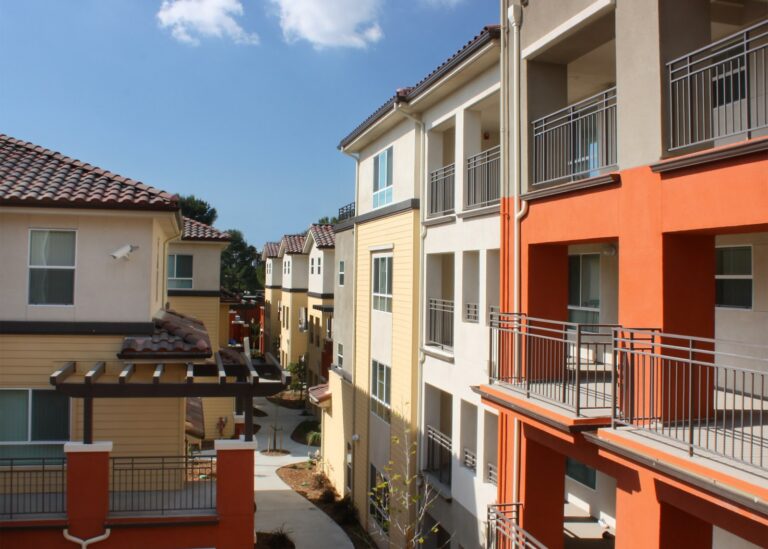
Inclusionary zoning allows a few people to live in desirable, new construction buildings for much less than market rates. But it also carries with it a slew of perverse consequences. Because it’s a tax on construction, it reduces supply. Inclusionary zoning also leads developers to build higher-end buildings than they would otherwise, further squeezing out lower- and middle-income tenants. While inclusionary zoning makes life easier for a few middle- and high-income residents lucky enough to secure below market-rate units in expensive cities, it also contributes to the regulatory mess that constrains housing supply in general. This in turn drives up the cost of housing. The effects of these supply constraints fall hardest on low-income residents who can least afford artificially high housing costs. By placing further constraints on housing markets, inclusionary zoning makes it so that resources dedicated to providing housing for the truly needy don’t go as far as they could in a less regulated market. Subsidies to middle-income residents come with the unfortunate side effect of making it more difficult for non-profits and government programs to make housing accessible to the truly needy. Recently I presented on a panel at Chapman University on the future of housing in Orange County. Our panel highlighted the tensions between housing programs designed to help low-income and homeless households and those designed to help middle-income households. While my talk focused on regulatory barriers that make housing unaffordable for people across the income spectrum, Maria Cabildo — a former non-profit developer for low-income housing — talked about her experiences building housing for the homeless and very-low-income families. Maria pointed out that market-rate housing is too expensive for minimum wage earners in every single county in the country. In expensive markets, policies designed to subsidize housing for middle-income people drives prices even farther out of reach for low-income […]
Thanks to Stephen Smith, I recently ran across an interesting database: HUD data on building permits by municipality. So I decided to find the number of permits per 1,000 for a wide variety of cities, focusing on (1) multifamily permits (because rising rent is a bigger problem in most places than rising home costs) and (2) during 2015 and 2016 (because isn’t two years of data always better than one?). Here’s what I found for the places I bothered to look up: Growing high cost cities permits per 1000/mean price for units with 5 or more structures in thousands Seattle 29.4 Denver 19.5 Washington 13.7 Boston 12.5 Portland 12.2 Brooklyn 11.5 Manhattan 10.1 San Francisco 8.8 San Diego 7.6 Los Angeles 6.7 Growing low cost cities Atlanta 28.7 Dallas 15.3 Nashville 14.6 Austin 13.2 (not sure whether this counts as a low-cost city- really its kind of borderline) Charlotte 12 Columbus 7.4 Houston 6.8 Indianapolis 2.3 Low demand (i.e. declining) cities Chicago 5.4 St. Louis 3.6 Cincinnati 2.3 Milwaukee 2.2 Baltimore 2.1 Detroit 1.4 Another fun fact: suburbs of expensive cities lagged behind even the low-demand cities. Nassau and Suffolk Counties had 0.3 and 0.2 multifamily permits per 1000 respectively, Marin County outside San Francisco 0.7, Orange County outside Los Angeles 4.7. Some takeaways: 1. Low-demand cities generally had less building than even the most restrictive cities. 2. Within the high-cost city group, it seems to me that there is a strong correlation between permits and prices: Seattle and Denver are certainly cheaper than San Francisco or Los Angeles. 3. On the other hand, there were some low-cost cities that didn’t have a lot of new construction, like Houston and Indianapolis. But this weirdness can be explained away by looking at new single-family construction: Houston had more than […]
A common argument against new housing supply is that in high-cost cities such as New York, demand from foreign buyers is so overwhelming as to make new supply irrelevant. A recent study (available here) by two business school professors suggests otherwise. The study does show more foreign involvement in the NYC market than I expected: just over 13 percent of Manhattan buyers, and 5 percent of all regional buyers, come from outside metropolitan New York. Even this share is less than in some lower-cost markets: the study notes that 17 percent of Las Vegas buyers are from outside the city. However, the impact of “out of town” buyers is pretty small: the authors conclude that out-of-town buyers “cause an increase in house prices of 1.1% and an 39 increase in rents by 1.6% in both zones.”

The alternative title for this piece was: “Ballot Box Zoning: Where Needed Housing Goes to Die.” Next month, Los Angeles will be voting on Measure S, a proposed 2-year policy that will effectively serve as a moratorium on new construction. That is, Measure S will require a public vote on any new development that does not fit within existing zoning. Most of the city’s major leaders, including Mayor Eric Garcetti, have come out against the measure, and the Los Angeles Times followed suit just a few days ago. I’m not going to rehash arguments for or against the measure. Instead, I’m going to offer several warnings based on the experience of Davis, CA, which passed its own Ballot Box Zoning Measure in 2000. Measure J, our ballot box zoning measure, requires voter approval on any attempt to change the zoning designation of open space or agricultural land that sits on the community’s edges. The law also explicitly names two particular parcels that must be voted on prior to approval. So for the purposes of this piece, consider it a ballot box zoning law targeting sprawl. Warning 1: These Measures Are Hard To Roll Back Measure J passed in Davis with just 53.6% percent of the vote in a March primary when residents cast just 19,000 votes (in a city with at least 49,000 voting-age residents). The law contained a renewal clause, and when it came up for renewal in 2010, support jumped to 76.7% percent. This increased support may be an artifact of how the opposition attempted to stall the measure’s renewal. Opponents of the renewal made a NIMBY argument the centerpiece of their case: they argued that slowing growth at the edge of town meant more infill pressure in the city’s core, threatening the character of neighborhoods. As I’ll discuss in a […]

As a Market Urbanism reader, you are hopefully fluent in the problems of exclusionary zoning. If you’re new to the term, there are some good pieces on the topic here and here. Basically: exclusionary zoning is the use of zoning to price people out of a community. The classic example is minimum lot sizes or minimum unit sizes: cities only zone parcels big enough to ensure low-income families cannot afford the housing. When subsidies for affordable housing require specific unit attributes, like reduced parking ratios, a community can simply require parking ratios above that threshold (although states can move swiftly to stamp out such practices). States have also responded to exclusionary zoning practices with a wide array of policy interventions known collectively as “anti-snob laws.” One key component of California’s anti-exclusionary efforts is called the Regional Housing Needs Allocation (RHNA). The law requires each jurisdiction in the state to produce a Land Inventory (or Adequate Sites Inventory, or Sites Inventory, or Buildable Land Inventory) that demonstrates the jurisdiction possesses space to accommodate anticipated housing needs at adequate densities. Read “adequate densities” as dense enough to produce affordable units. Scott Wiener, the state senator representing San Francisco, is pushing to give the RHNA some real teeth. The most contentious component of the process is the definition of “need” for each jurisdiction. The state calculates anticipated need based on population and jobs projections for each region. Regional councils of government (COGs) are then empowered to distribute the regional need to each jurisdiction within that region. Need is quantified in terms of units, and these needed units are further categorized into four groups: units affordable to Very Low Income, Low Income, Moderate Income, and Above Moderate Income households. Regional agencies had some flexibility in making these allocations in the past. Thanks to SB 375, which passed in […]
One common argument against new housing is that permitting it causes land to become more valuable, thus leading to higher rather than lower rents. It seems to me that this argument is unpersuasive for a few reasons. First, if it was true, places with permissive zoning would have higher rents rather than lower rents, as the possibility of building would cause land values to explode. Obviously this is not the case. Second, the argument leads to absurd results. If downzoning reduces land values, obviously the best way to ensure low rents is to prohibit as much housing as possible. Perhaps we could prohibit all housing not on five-acre lots. But suburbs with large-lot zoning tend to be pretty expensive, suggesting that such policies are more likely to increase property prices than to lower them. Third, the argument suggests that land costs are the primary determinant of rents. But in fact, land values are much more volatile. The Lincoln Institute has created a database of land value data, and shows huge swings in land prices. For example, in the New York City metro area, the land price (apparently per house) swung from $99,000 in 1996 to just over $433,000 in 2006, down to under $225,000 in 2012, and up to about $250,000 today. It goes without saying that rents and housing prices follow very different patterns.