Physical Address
304 North Cardinal St.
Dorchester Center, MA 02124
Physical Address
304 North Cardinal St.
Dorchester Center, MA 02124

Liberalizing Cities
From The Ground Up
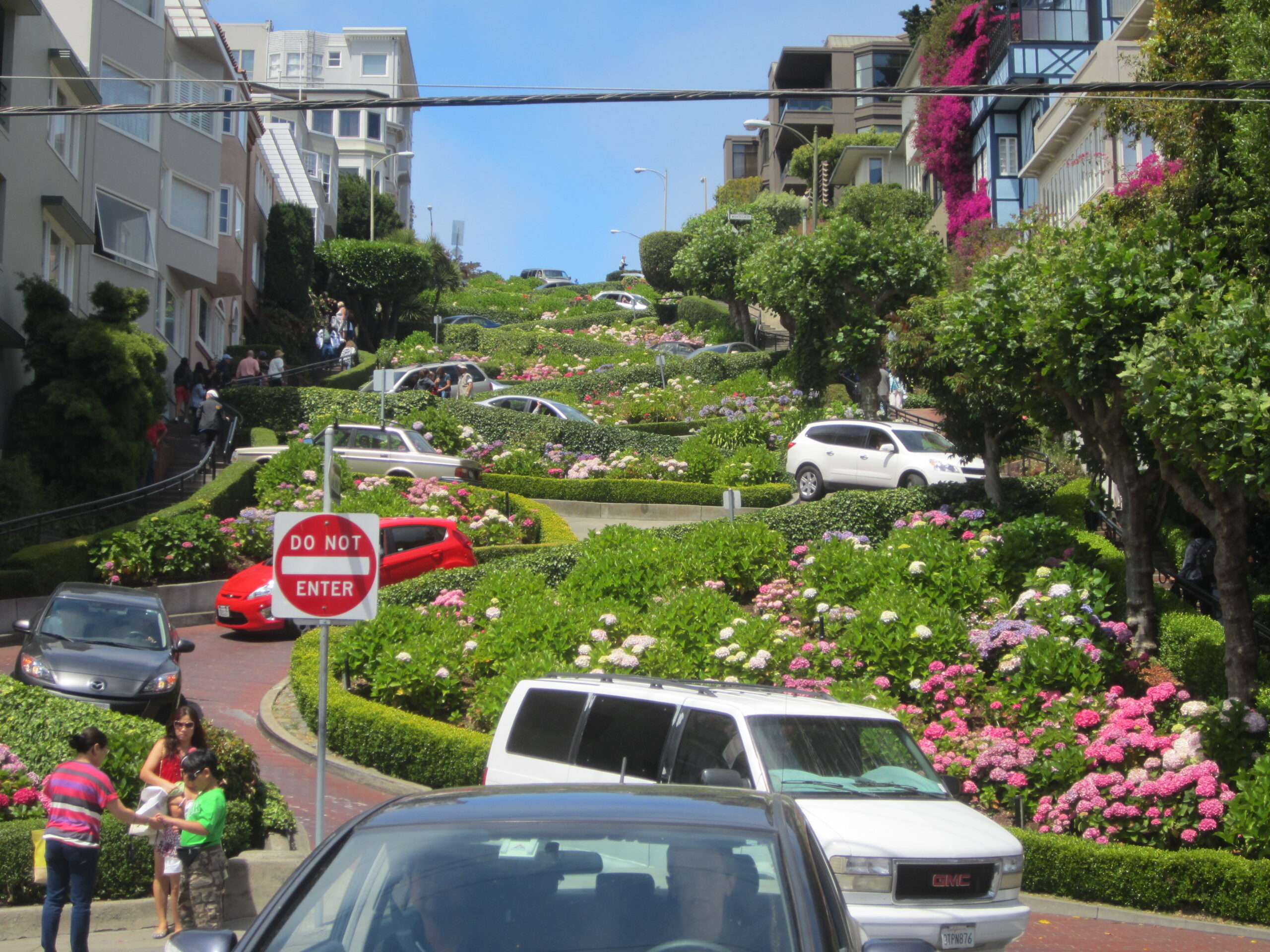
Andrew Miller at Changing Lanes recently re-posted his 2025 article, “The 50% problem.” He’s positively inclined toward self-driving cars, but recognizes that there will be real growing pains. In this article, he predicts that tensions between human and machine drivers will rise to a crescendo at its worst when neither predominates:
Peak Chaos (45% to 55%)
At the midpoint of AV road share, the system no longer risks mere strain, but failure. When the roads contain a complex mix of fully human-driven vehicles, ADAS-supervised vehicles, conditionally automated vehicles, and geo-fenced robotaxis—none dominating—no single behavioural logic will govern traffic.
I think this is not quite right on two counts:
Full disclosure: this post began as an email to Andrew (whom I like and respect!) that I decided to formalize instead.
If I were to start modeling road chaos with the introduction of a new type of driver, I would want to include three key ingredients:
Machine drivers have to adjust to human drivers very early in the process or they won’t be allowed to stay on public roads; we can take that as given.
From long experience as a cyclist, my guess is that the crossover point – where further saturation starts reducing chaos – happens at a pretty low rate of saturation, more like 5% than 50%. When I cycle in suburban areas where cyclists are rare (especially back in the 90s), drivers can be genuinely confused with how to deal with me. They might proceed very slowly behind me, or pass dangerously, or honk.
But at a modest saturation rate (maybe 1%), most drivers adjust and learn how to pass a cyclist, or handle a cyclist passing them in the red light queue. But at the same time, the number of opportunities for error is 50 times higher at 5% cyclists than 0.1% cyclists. Do drivers get 50x better with regular exposure to cyclists? No. No they do not.
In particular, there are a small number of drivers who have no clue how to drive around bikes. As bike saturation rises, that small number is forced by circumstance to acclimate. At the extreme you have the Netherlands, where it’s inconceivable that a driver not know how to operate around bikes. In DC or Boston, the 5% or less bike share causes more disruption than does the 50% bike share (or whatever) in the Netherlands.
To my mind, disruptive human-AV interactions will occur when (a) there’s a bunch of vehicles involved and (b) at least one of them hasn’t adjusted. Given that it’s humans, not machines, who still have to learn to deal with the other, conditions (a) and (b) are going to be satisfied most commonly when there is still a large human majority on the road, but some of those humans haven’t yet learned how to interact with a machine driver.
Long before we reach 50% saturation, humans will internalize lessons like “if I double-park, AVs will just sit there, cause a huge backup and people will be angry at me” or “AVs are going to follow yield-to-the-right rules strictly”. Once the frequency of un-accultured human drivers starts to shrink to a small minority, then the worst is over. Peak chaos might occur when 5% of vehicles are AVs and 20% of humans are still clueless. These are just vibes numbers, of course, and cluelessness is not a binary variable. But I’ll bet Andrew a beer that the number of human-AV collisions peaks (in a given geography) before AV saturation reaches 25%.
So far, I’ve written this agnostically, as if humans and machines have random differences and we could swap their places in the model. But it’s not random. Machines are far more predictable and uniform in behavior than humans. So it will be pretty easy to learn their tendencies.
The part that I don’t know is whether machine drivers will ultimately be smoother than humans. On foot, humans are very good at negotiating each others’ space with instinctual balance and nuanced body language. We’re less fluent in vehicles, but still pretty darn impressive given that we didn’t have any evolutionary hardware for solving spatial problems at 100 kph. Will AVs be able to copy all of that, or develop their own smoothness? Or will they be held back by the necessarily-high degree of conservatism in programming? If AVs are just plain clunky and slow, then city driving will become slower and clunkier as AVs take market share even without any misunderstanding between modes.




I would guess that in central parts of San Francisco, Los Angeles, Austin, etc, the 5% threshold is already being reached at some times of day in some neighborhoods!
“whether machine drivers will ultimately be smoother than humans”
In my experience as an SF pedestrian/cyclist and occasional Waymo rider, they’re already much smoother, because they’re steady and predictable – they get to the speed limit and stay there, no jamming on the pedal to catch a light and then jamming on the brakes because they didn’t get there, 100% usage of turn signals, etc.
The big problem so far in SF has been that they were so deferential at things like stop signs that human drivers started ignoring them at four-way stops and the like. So they had to be programmed to creep forward into the crosswalk (in violation of the law!) in order to get through intersections at all.
Have you experienced Waymos in Los Angeles (or elsewhere)?….either as a passenger, as a driver of your own car, or as a pedestrian?
I have; and I think the growing pains are going to be minimal.
I think Waymos are a superior experience and the only thing that is that issue is how quickly the costs come down.