Physical Address
304 North Cardinal St.
Dorchester Center, MA 02124
Physical Address
304 North Cardinal St.
Dorchester Center, MA 02124

Liberalizing Cities
From The Ground Up
Introduction
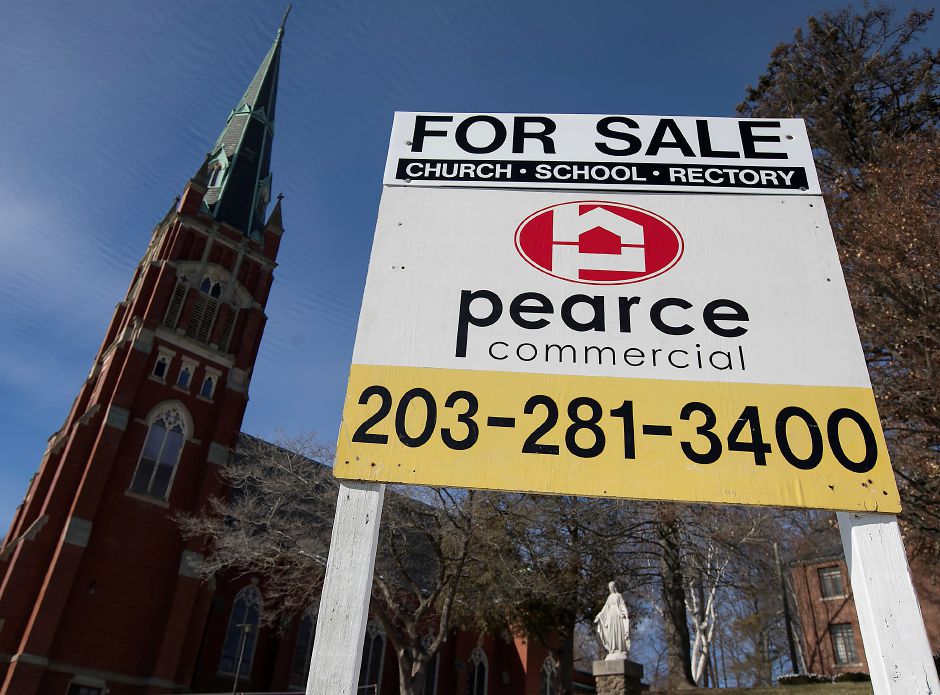
Cities, towns, and villages must open their arms wide to religious institutions and other developers wanting to reuse and redevelop emptying faith properties or otherwise be littered with the husks of once vital houses of worship throughout their communities.
What can cities do to unleash the potential of these omnipresent properties? A virtual panel of 10 leaders in revitalizing faith properties has identified five major areas where cities need to take the lead. The experts have discovered through experience how challenging it can be to convert the surplus real estate of a faith institution into community assets. Whether developers, financiers, facilitators, all 10 either are members of a religious community or have been working hand-in-hand with them to reuse and redevelop faith properties.
Cities need to innovate first, because a tsunami of emptying houses of worship is washing across America and second, because “faith leaders and congregations are not real-estate experts,” warned one participant. The panel identified five basic areas in which city leaders need to intervene: relationships, research, regulation, money, and leadership. With all of the challenges facing America’s cities—budget, finance, police, infrastructure, etc.—worrying about emptying houses of worship rarely makes the list of the top 50, never mind top 10.
Relationships
Local government officials, elected and appointed, need to get to know the pastors and lay leaders who run their faith institutions–and vice versa.
• “It’s incredible how many municipalities haven’t engaged with the faith community.”
• “They can bring faith leaders, city leaders, and other sector leaders for dialogue together about religious assets and the common good.”.
• “Congregations can be slow to decide on matters that involve money. Please be patient with them.”
Research
Local government officials need to get a good handle on the properties owned by faith institutions—how many, what size, what condition, what potential, what drawbacks.
• Local planners need to “know what is there. Inventory the potential properties and understand the potential impact.”
• Compile a “faith property database.”
• The database should include “How many institutions? Which religions, denominations? What [community] services do they provide? [Specify] access to transit, as well as the zoning on those properties in their communities.”
• “They (local governments) can use their internal resources to produce reports, stories, and case studies that raise awareness of opportunities.”
Regulation
Government officials need to update their comprehensive plans, zoning, building codes, and historic preservation ordinances to embrace using faith properties for multiple and mixed use.
• “Be more flexible on zoning and permitting, particularly when a faith-based institution is looking to stay and add a beneficial new use,” adding that a local government should “rezone shoulder-to-shoulder with you.”
• Implement “flexible and capacious zoning for houses of worship and auxiliary buildings,” including “by-right authorizations for faith-based developments.”
• Streamlined “permitting for everything from pop-up events to large-scale infill,” would help animate faith properties, adding “accompany any policy change with staffed and funded proactive outreach to make sure it actually makes a difference.”
• Why not “use church campuses as a testing ground for progressive regulations?”
Money
Local and state government officials need to find money for each stage of a reuse and redevelopment project: feasibility, pre-development, development, and—sometimes—operations. All 10 respondents mentioned funding.
• Project participants need “funding from public sources through a housing trust fund or other dedicated sources for both pre-development and construction.”
• Establishing a “revolving loan fund at very low interest.”
• Funding sources that “provide low-cost gap funding for projects.”
• “Providing some relief on fees and costs for the redevelopment”
• “They can bring city-owned land to a faith project.”
Leadership
Local government officials need to provide leadership to often unfocused faith institutions and sometimes skeptical neighborhood residents.
• “Faith leaders and congregations aren’t real estate experts. Provide clear, user-friendly, hand-holding processes for activation of faith properties.”
• “Some cities, like San Antonio and Charlotte, have dedicated staff to interface with houses of worship to help them move forward.”
• Education “on what makes good clients and good consultants would be helpful.”
• “Communities and churches have diverse and opinionated stakeholders. How quickly deals can dissolve if they don’t understand each other fully. “
• Help form “a downtown consortium of churches who are assisted to do some joint planning.”
• Consider using city staff to “help the congregation stay alive before you give it options to use its site more extensively. Is there an immigrant congregation that needs a place to worship? A dance or theater company? Do not let gentrifying, mission-inconsistent, glamorous bids take more property away from the people.”
• “Focus on partnership; identify key point person; address risk while remaining positive; emphasize mission alignment; highlight successful case studies.”
Examples
• The City of Atlanta has initiated the Mayor’s Faith-Based Development Initiative, which has a goal of building 2,000 affordable-housing units by 2030.
• The City of Charlotte has put together its Faith in Housing Initiative, which assists faith-based organizations with tools, resources, and partnerships to create affordable housing and other community assets.
• Montgomery County, Maryland, has put in place a Faith Zoning Text Amendment (ZTA), which lifts restrictions that prevented houses of worship from using parking lots or extra land for residential housing and eases restrictions against townhouse and multi-unit living spaces.
Other municipalities that have passed legislation or formed initiatives to promote reuse and redevelopment of faith properties include New York City, Pasadena CA, Raleigh, St. Petersburg, San Diego, and Sierra Madre CA.
Several state governments have passed YIGBY (Yes in God’s Backyard) legislation, giving faith institutions—and in some cases, other nonprofits—expanded powers to develop affordable housing serving their communities. California, Florida, Hawaii, Maryland, Minnesota, Washington and, most recently, Virginia, have passed legislation so far, with other states queuing up.
More details about state and local legislation can be found in “YIGBY Laws,”
https://papers.ssrn.com/sol3/papers.cfm?abstract_id=6507981
by Father Patrick E. Reidy, CSC, Associate Professor at the University of Notre Dame Law School and Faculty Co-director of the university’s Church Properties Initiative.
Conclusion
The emptying of faith properties in the U.S. and Canada is well under way and promises to be relentless of the next decade. The Great Mismatch between small, aging congregations and large, deteriorating properties means that local government whether it wants to or not, will be pressured into intervening in the reuse and redevelopment of 10s of thousands of faith properties.
With no action, municipalities face the potential of spiritual brownfields—emptying properties that will harm the neighborhoods around them. With deliberate strategies, cities, towns, and villages and related organizations like development authorities, business improvement districts, and Main Street programs, can turn properties into vital community assets, hosting non-profits, affordable housing, and market-rate developments that can provide much needed property-tax revenues.
Panel Participants
Rev. Joseph W. Daniels, Jr., Lead Pastor, Emory Fellowship United Methodist Church, Washington DC.
Mark Elsdon, Co-founder and Co-CEO of Rooted Good, Madison, WI.
Joel Gilland, President and CEO, Wesley Community Development Corp., Huntersville NC.
Madeline Johnson, Program Director, Church Properties Initiative, Fitzgerald Institute of Real Estate, University of Notre Dame, Notre Dame IN
Dr. Nadia Mian, Senior Program Director, Ralph W. Voorhees Center for Civic Leadership, Rutgers University, New Brunswick NJ
Dr. Wesley Myrick, Executive Director, Georgia Interfaith Public Policy Center, Atlanta
Rev. Dr. Penny Nixon, Faith Director, Housing Leadership Council of San Mateo County, San Mateo CA
Daniel Pryfogle, Co-founder and CEO, Sympara, Cary NC
Rev. Dr. Donna Schaper, Interim Minister, United Church of Gainesville (FL)
Meghan Taylor Steshyn, Senior Program Officer for Mission Real Estate Development, Trinity Church Wall Street, New York