Physical Address
304 North Cardinal St.
Dorchester Center, MA 02124
Physical Address
304 North Cardinal St.
Dorchester Center, MA 02124

Liberalizing Cities
From The Ground Up
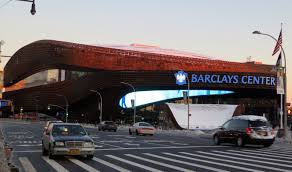
This week’s column is drawn from a lecture I gave at the University of Southern California on the occasion of the retirement of urban economist Peter Gordon. One of my heroes is the urbanist Jane Jacobs, who taught me to appreciate the importance for entrepreneurial development of how public spaces—places where you expect to encounter strangers—are designed. And I learned from her that the more precise and comprehensive your image of a city is, the less likely that the place you’re imagining really is a city. Jacobs grasped as well as any Austrian economist that complex social orders such as cities aren’t deliberately created and that they can’t be. They arise largely unplanned from the interaction of many people and many minds. In much the same way that Ludwig von Mises and F. A. Hayek understood the limits of government planning and design in the macroeconomy, Jacobs understood the limits of government planning and the design of public spaces for a living city, and that if governments ignore those limits, bad consequences will follow. Planning as taxidermy Austrians use the term “spontaneous order” to describe the complex patterns of social interaction that arise unplanned when many minds interact. Examples of spontaneous order include markets, money, language, culture, and living cities great and small. In her The Economy of Cities, Jacobs defines a living city as “a settlement that generates its economic growth from its own local economy.” Living cities are hotbeds of creativity and they drive economic development. There is a phrase she uses in her great work, The Life and Death of Great American Cities, that captures her attitude: “A city cannot be a work of art.” As she goes on to explain: Artists, whatever their medium, make selections from the abounding materials of life, and organize these selections into works […]