Physical Address
304 North Cardinal St.
Dorchester Center, MA 02124
Physical Address
304 North Cardinal St.
Dorchester Center, MA 02124

Liberalizing Cities
From The Ground Up
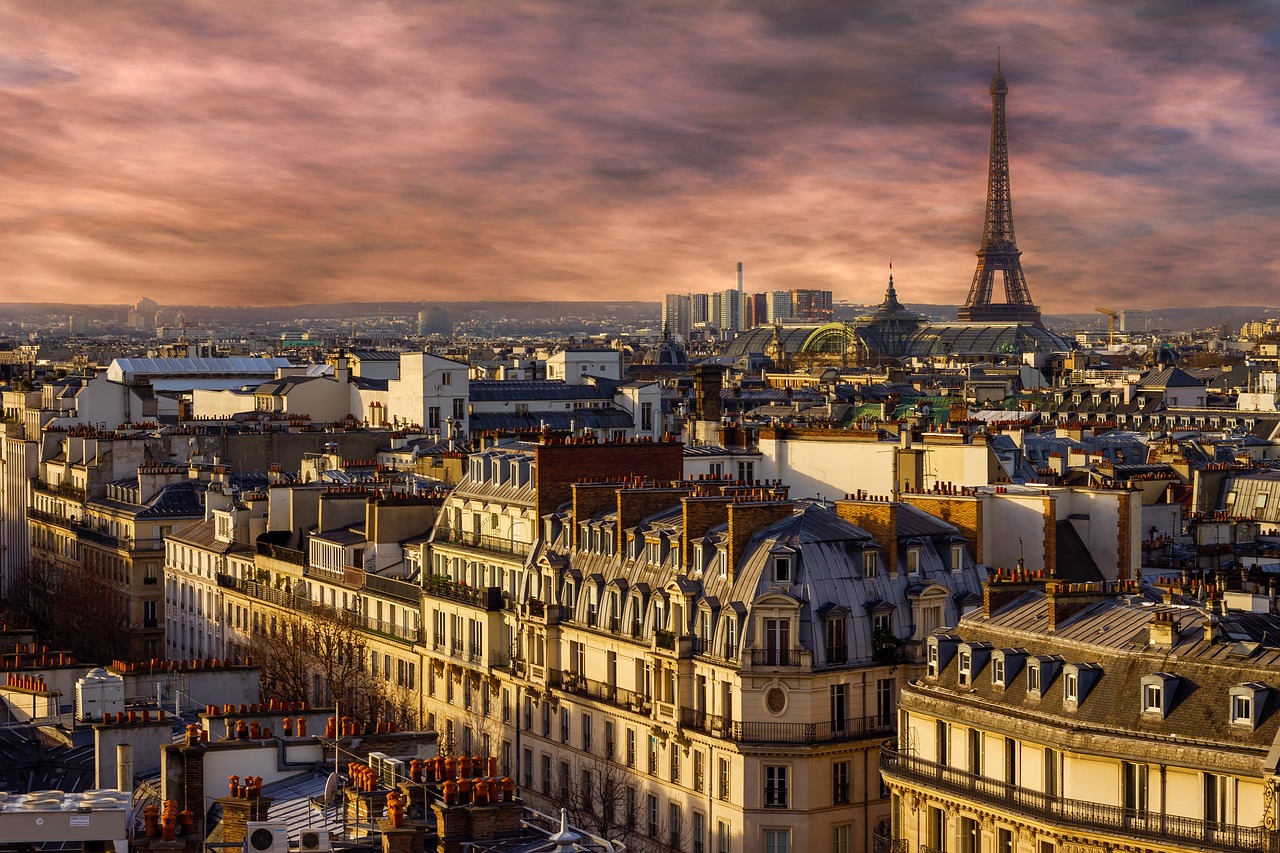
On Twitter, Patrick Collison chided YIMBYs for using Paris as an example of density – because Paris happens to not only be a helpful example of high population density midrise urban form, but is also widely considered the most beautiful city in the world.
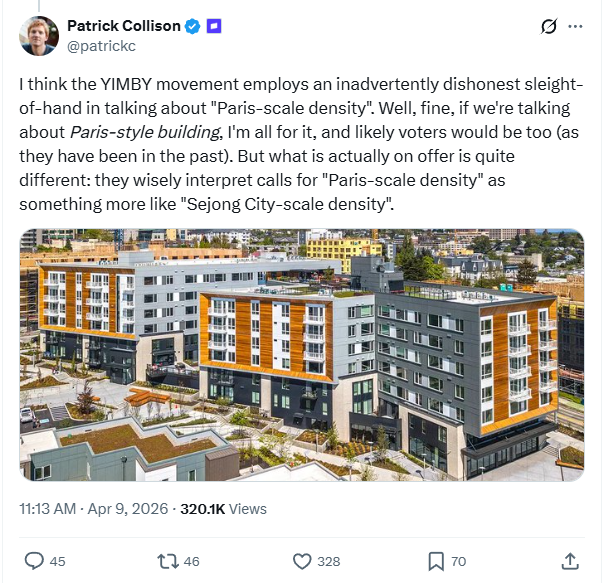
This is a reasonable critique and I’ve never used Paris as a model for this reason. Being allowed to build six-story buildings isn’t going to make your city Paris any more than having free speech is going to make you Marcel Proust.
But let’s flip the lens around: What about those buildings Collison chose to exemplify “what is actually on offer”? That’s the Batik Apartments in Seattle, completed in 2018. Strong YIMBY policy have made Seattle a renter’s market:

I agree that the Batik is pretty ugly. I count at least 7 distinct exterior materials interspersed even within a very small area. Why? It’s not the cheapest option, which would be to stick with one, maybe two finishes for simplicity. Nor are the various small protrusions, each of which adds cost and reduces resilience.

So why was it built like this? It could be that customers want this and they just don’t share my preference for simplicity. It could reflect the artistic values of the architects, who seem to be very proud of it.
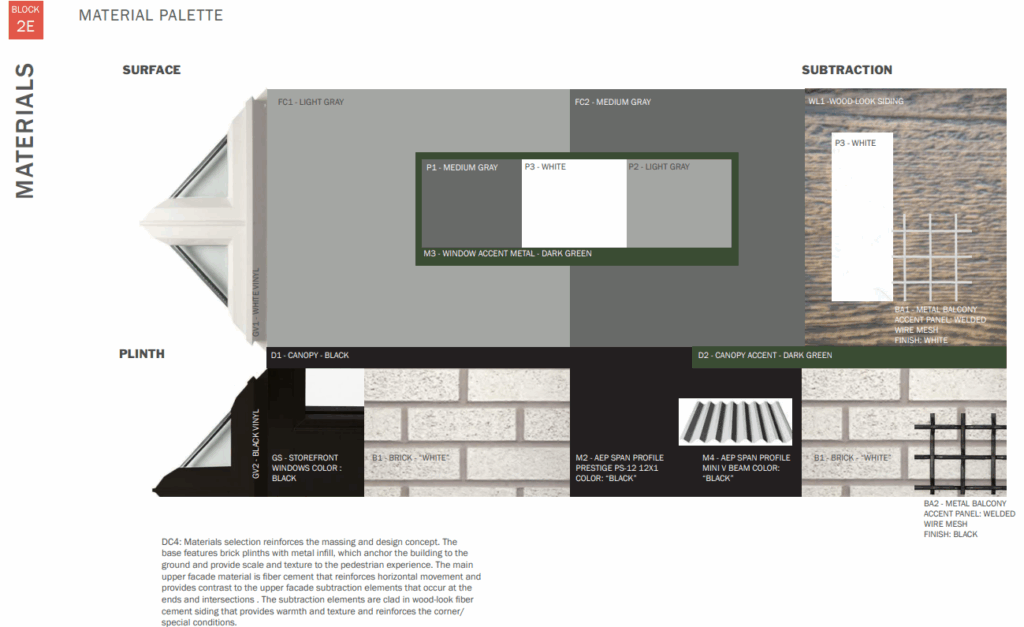
A third possibility is that the Batik looks unique in exactly the same way every other new building is unique because it had to clear Seattle’s famously strict design review (which has since been pared back by YIMBY-led state laws). Here’s the developer’s 81-page response to the city’s Early Design Guidance (EDG) Report feedback. (The city has a helpful website outlining the 22 steps to submit plans for EDG, which of course is just one of many approvals before construction may begin.)
The EDG response has many renderings of the structure and lovingly presents this awful palette of colors and textures.
Could Seattle architects have legally built classically-styled apartments? I can’t find a single modern example. There’s a good chance that many neighborhood Design Review Boards would have rejected a Haussmann-style building (or even a copy of the Cobb Building) as “pastiche”. In the silly world of contemporary architecture, it’s dishonest to pretend your building is older than it really is, but mandatory to “break up the massing” and pretend your building is several different buildings. The obsession with articulation, multiple materials, and “doodads” yields a style I call “design review rococo.”
So what would American architects build if it was just between them and the market? Surprisingly few big cities allow us to test this idea. Even fast-growing Sunbelt cities like Miami, Austin, and Phoenix usually have design review. Thankfully, there’s Houston.
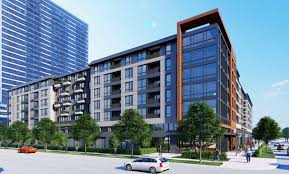
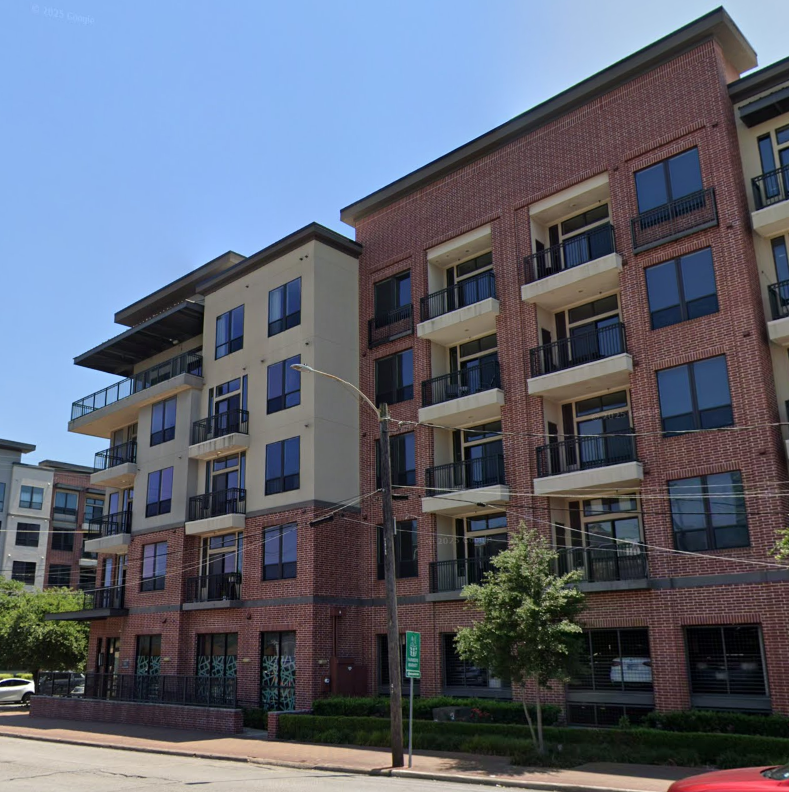
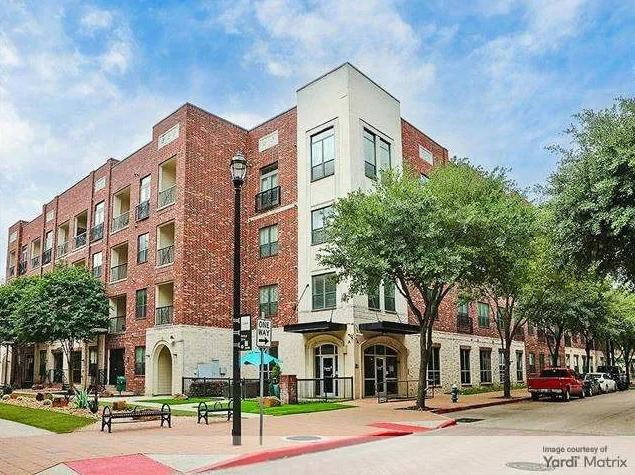
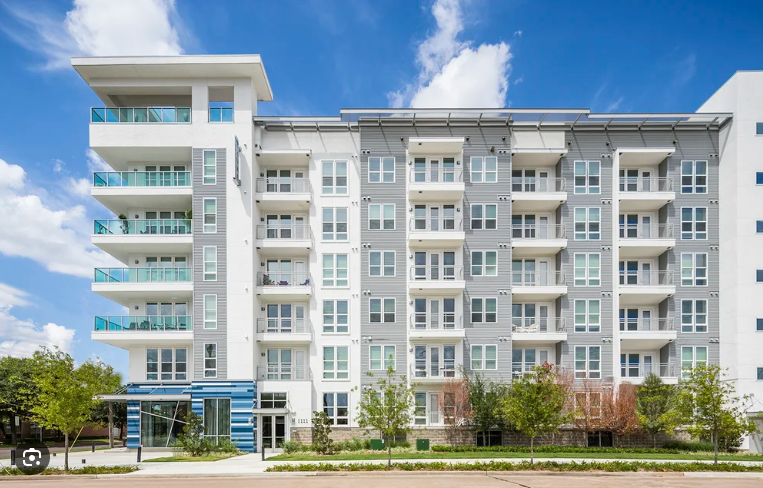
And…it looks pretty similar. The colors are perhaps a bit more muted on average, but that probably reflects the different climate. Houston builders presumably aren’t wasting their money on architects’ whims. The people with skin in the game believe that breaking up the massing and using mixed materials, although it adds costs, attracts more renters.
Personally, I love the exception among the Houston photos – the Marquis Enclave. It’s an industrial loft imitation complex which covers seven entire blocks and has created an excellent shady streetscape at the edge of the Fourth Ward:
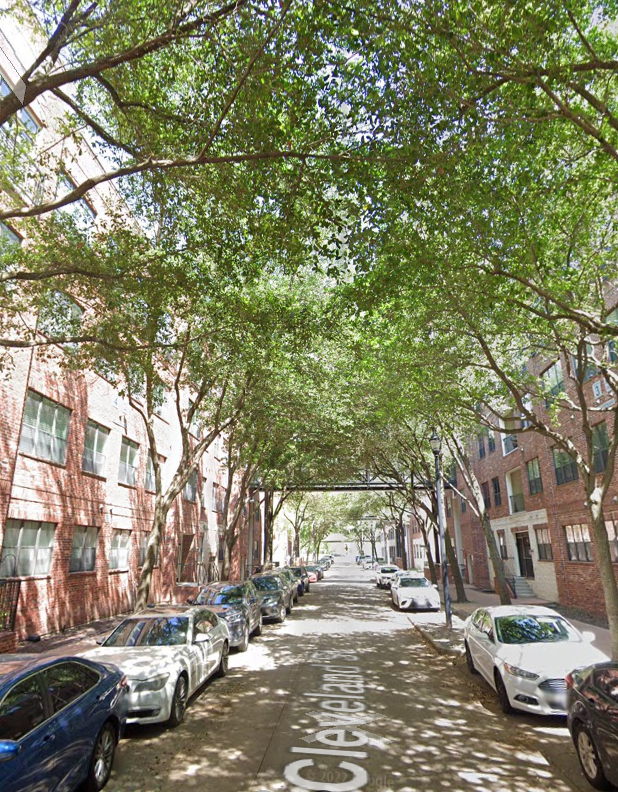
But if you look at the Marquis Enclave’s advertising, it nowhere mentions the architecture or public realm. Instead, the word “modern” shows up four times on the recruitment page.
If this casual analysis is correct, then Americans don’t care very much about exteriors. And to the extent that they care, they favor midrise buildings that Collison and I find ugly. I would very much like to be wrong about this!
Practically speaking, what it means is that Collison’s core point is probably wrong: offering Americans a product that he and I like better isn’t going to make them favor upzoning.